

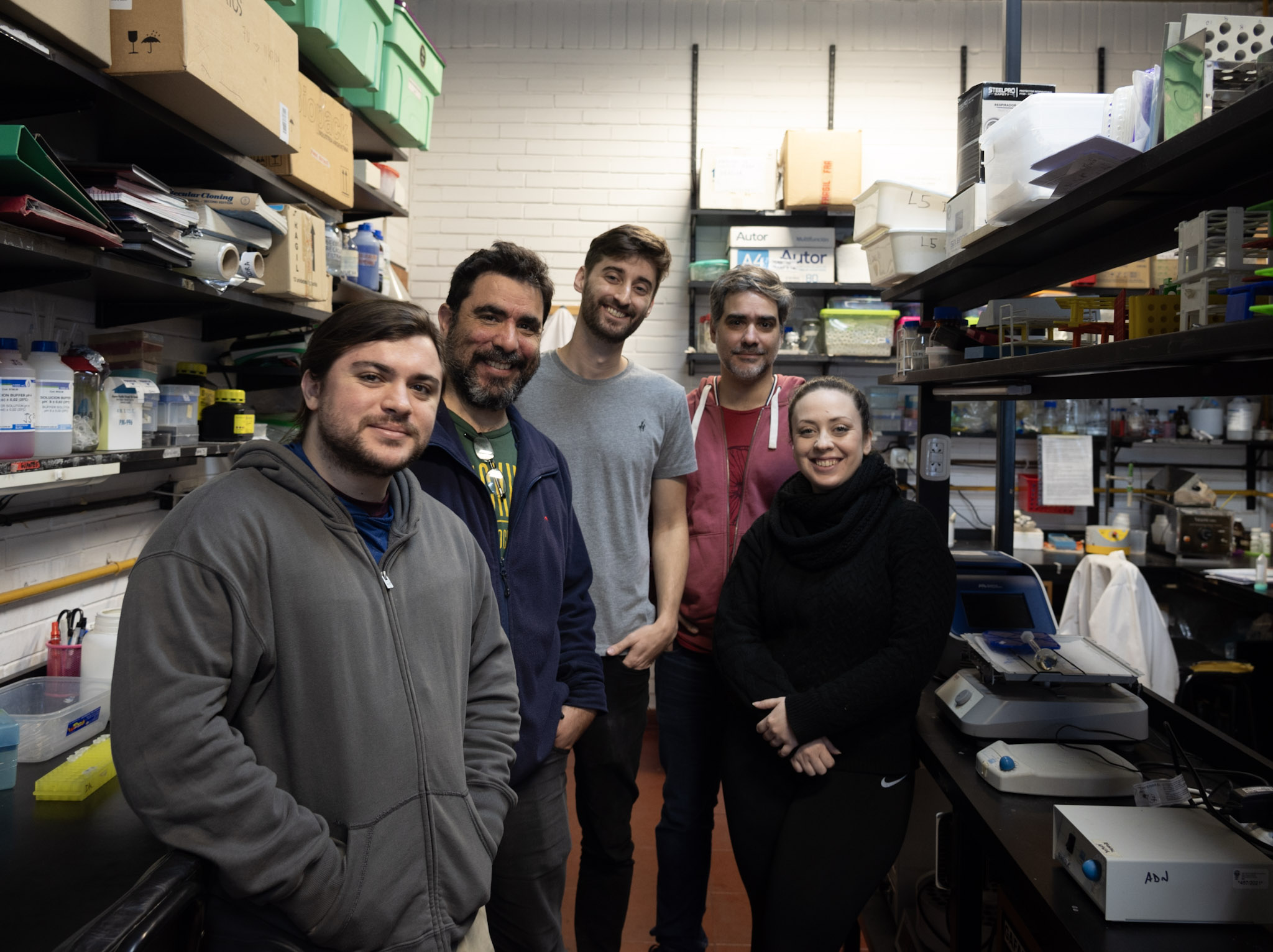
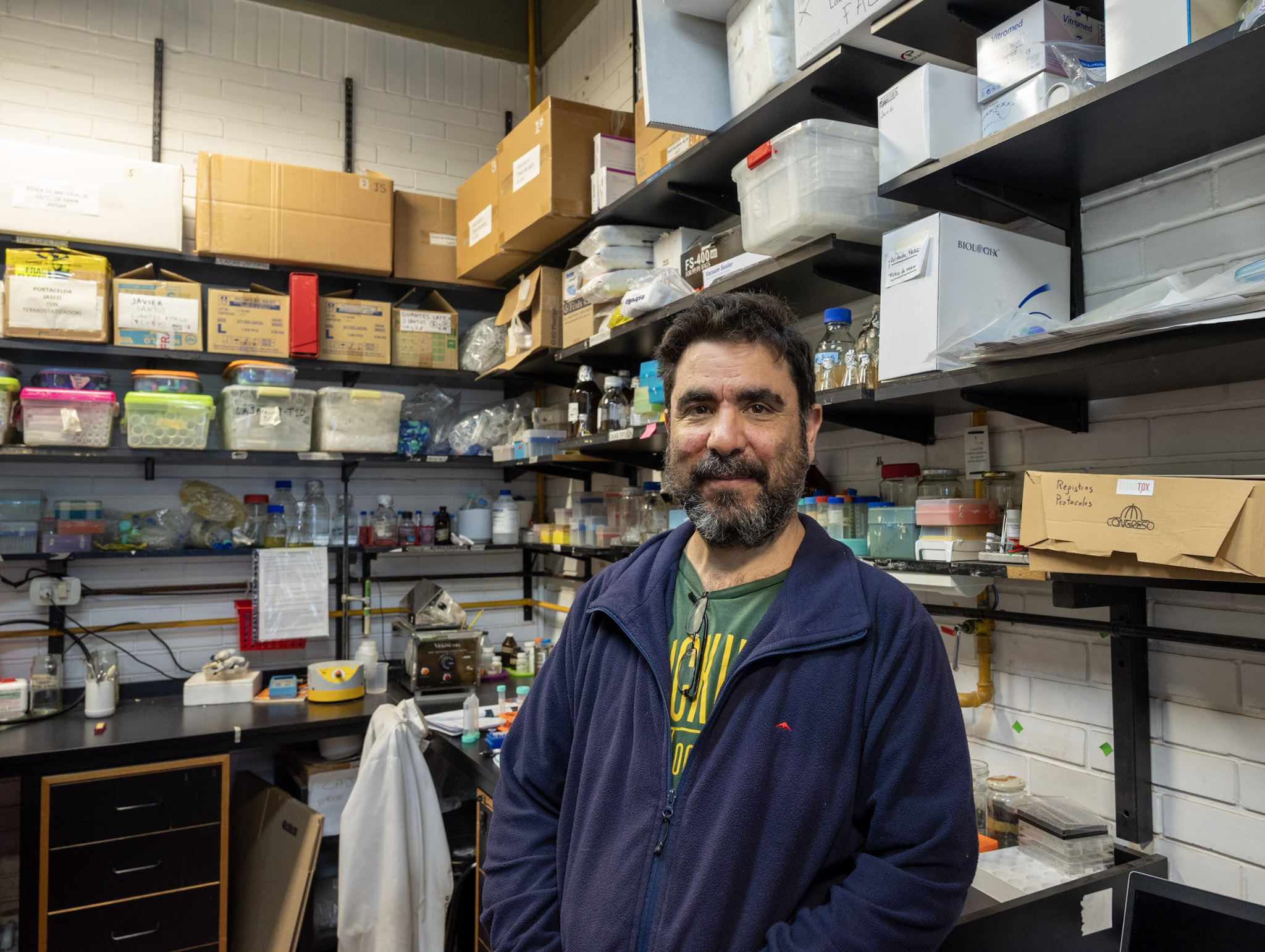
Summary
We study the evolutionary and physicochemical constraints that shape life at the molecular level. In particular, we focus on how these factors influence the structure, activity, and function of proteins. We then apply this fundamental knowledge to the elucidation and prediction of pathogenic mechanisms, as well as to the design of mutants, chimeras, and genetic networks from an engineering perspective.
In other words, we learn from the processes that take place in living systems and use this knowledge to better understand human diseases and to develop technological tools that address regional challenges (e.g., an affordable biosensor to measure arsenic contamination in drinking water).
We are especially interested in open technologies and in inter- and transdisciplinary approaches, with a strong inclination toward perspectives from the social sciences, industrial design, and the arts.
Lines of research
The overall goal is to understand how DNA-binding proteins have been optimized through evolution to interact with their natural binding sites. Protein–DNA interactions are central to the regulation of cellular activity, including gene expression, replication, and genome organization. However, little is known about the biophysical and evolutionary constraints that affect DNA-binding proteins. We aim to address both aspects independently and then integrate them to obtain a comprehensive view of protein–DNA interactions and their evolution.
Our working hypothesis is that proteins and DNA co-evolve, and that their properties—particularly in terms of affinity and specificity—depend on protein function. Each DNA-binding protein must locate its binding site(s) within a vast excess of non-specific sites. To achieve this, it must display an appropriate binding affinity and, more importantly, sufficient discriminatory power.
Through the comparison of orthologous proteins (mainly from extremophilic organisms), we aim to identify the influence of environmental properties (such as temperature, pH, or ionic strength—in halophiles) on residue composition at the interaction interface.
The questions we address seek to clarify the determinants underlying the molecular recognition process between these two types of molecules and how extreme environments exert selective pressure that favors particular structural responses. Specifically, we are motivated by the following questions:
- Has protein–DNA interaction been optimized during evolution?
- Is specificity or affinity maximized? Or is there a balance between these properties?
- Does the property that is maximized depend on protein function?
- Does it depend on protein topology?
- Does this optimization vary between proteins with multiple binding sites versus a single site?
- What proportion of the interaction is governed by “direct readout” versus “indirect readout” (in both DNA and protein)?
- Are randomly occurring binding sites outside functional regions selected against in the rest of the genome?
To address these questions, we rely on structural information from protein–DNA complexes and sequence data to perform co-evolutionary analyses between orthologous proteins and their corresponding binding sites.
Our approach is to obtain this information through an iterative cycle that combines retrospective use of experimental data, bioinformatic tools for in silico predictions, and prospective validation of these predictions through the generation of new experimental data.
Since the completion of the Human Genome Project, and further boosted by NGS (Next Generation Sequencing), a vast amount of information on human gene sequences and countless variants is now available, many of which may be associated with disease. However, determining causality remains a major challenge, for which appropriate data and tools have only recently become available.
A significant number of these variants affect protein structure, activity, dynamics, stability, and/or specific interactions. Studying them can help us understand and predict these effects, which in turn may contribute to personalized and precision diagnosis and treatment. In this context, it is essential to have tools capable of predicting the effects of gene variants of uncertain significance with the highest possible accuracy and reliability, and that are accessible to healthcare professionals.
The overall goal of this research line is to understand, using a combination of in silico and in vitro methods, the molecular mechanisms that alter the normal function of a group of proteins, leading to the development of human diseases, in order to develop a predictive strategy for assessing the potential pathogenic effects of novel variants.
In addition, we aim to promote the use and integration of this information within the local biomedical community.
Our hypothesis is that, based on a deep understanding of the sequence–structure–function relationship in the genes under study, it is possible to develop a predictive algorithm to assess the potential pathogenicity of a set of uncharacterized variants, which will then be validated through functional assays.
To test this hypothesis, our approach combines structural modeling and stability prediction (applied to gene variants with curated and reliable data), complemented by experimental validation, and integrated with an understanding of the associated pathology and its phenotypes.
Access to water suitable for human, animal, or agro-industrial consumption is an issue of increasing global relevance, driven by environmental deterioration associated with population growth, urbanization, and industrialization. Frequent monitoring and rapid management of water resources are essential to ensure the provision of safe water. Traditional analytical methodologies involve high costs in instrumentation, sample transport, and processing, highlighting the need for alternative methods that are affordable, simple, portable, and fast. Biosensors coupled to paper-based microfluidic analytical devices (μPADs) have gained prominence over the past decade, as they meet these requirements and enable the detection of a wide range of compounds.
This research line aims to develop a platform of biosensors in μPADs, either whole-cell or cell-free, capable of producing a color change in the presence of water contaminants, whether of mineral, organic, or biological origin. In this way, we seek to generate tools for the biodetection and/or biosensing of water contaminants, enabling the rapid, sensitive, and cost-effective identification of different types of pollutants in water bodies, including those of biological, anthropogenic, or geological origin.
We have developed a prototype arsenic biosensor, SensAr, as well as a microcystin biosensor, Cianotox, and a lead biosensor, Plombox.
Arthropods offer valuable proteins for biotechnology, particularly venoms and spider silks. Venom is essential for the production of antisera used to treat envenomations and is typically obtained by extracting whole venom from animals. However, due to the cannibalistic behavior of many spider species and the difficulty of breeding them, venom is often sourced from wild capture, which poses risks and limits large-scale production.
On the other hand, spider silks exhibit exceptional structural properties, but their protein complexity makes their expression and manipulation highly challenging. In both cases, a promising alternative is the recombinant production of optimized variants.
This research line aims to leverage recent technological advances in antivenoms, as well as in the design and production of recombinant proteins. It focuses on arthropod proteins for biotechnological applications, such as antivenoms against venomous animals and spider silk for biomedical biomaterials, balancing fundamental biophysical understanding with the advancement of biotechnological innovation.
Members:
Javier Gasulla
jgasulla@fbmc.fcen.uba.ar
Assistant Investigator CONICET
ResearchGate – Scholar
Marco Mancini
marcomancini128@gmail.com
PhD fellow CONICET.
LinkedIn
Macarena Alvarez
macarenalvarez92@hotmail.com
alvarezmacarena923@gmail.com
PhD candidate
LinkedIn
Celina Enriz
Graduate student
FAST Latam fellowship
Former members:
Francesco Di Giusto (Graduate student)
Virginia Bonczok (Graduate student)
Ezaquiel Alba Posse (PhD student)
Emilio Kolomenski (PhD student)
Yamila Gándola (Post-doctoral fellow)
Lorena Bonilla (PhD student)