
Summary
Microorganisms are all around us! It is estimated that 60% of the biomass on Earth corresponds to microbial life forms. Their activity is key to global homeostasis, as they are involved in the biogeochemical cycles of the most important elements. In addition, they have incredible metabolic capabilities that can be applied to serve humanity.
In our group, we study environmental microorganisms from two complementary perspectives, combining basic and applied research. On the one hand, we are interested in understanding the effect of anthropogenic activities on the structure and function of microbial communities and, on the other, their application for biotechnological purposes. We propose the use of synthetic communities as simplifications of real systems to gain a deeper understanding of the rules that influence the formation of natural consortia. The application of the knowledge generated can be reflected in the management of natural ecosystems, with the aim of conserving biodiversity, or industrial systems, with the aim of improving microbial processes.
Lines of research
The supply of drinking water across much of Argentina relies on groundwater sources. Nitrate contamination of groundwater is an increasing global problem driven by population growth and the intensification of agriculture and livestock production. These activities contribute to nitrate pollution through leakage from septic tanks or deteriorated sewage systems near urban areas, as well as through the leaching of fertilizers and animal waste in agricultural regions.
The presence of nitrates in drinking water poses significant health risks. Acute effects include methemoglobinemia, particularly in infants and older adults. Long-term exposure is also associated with health concerns, as the formation of nitrosamines and nitrosamides in the stomach has been linked to cancer development.
Several methods are available for nitrate removal from water, including dilution with uncontaminated water, ion exchange (IX), reverse osmosis (RO), and advanced electrochemical technologies. The most widely used methods, IX and RO, generate waste streams highly concentrated in nitrates and other salts, creating disposal challenges. In contrast, biological denitrification offers the advantage of converting nitrate into gaseous nitrogen, which can be safely released into the atmosphere, making it an environmentally friendly alternative. Biological denitrification has been successfully implemented in several countries worldwide. However, it has not yet been applied in Argentina, mainly due to the need to adapt operating conditions to local scenarios. These conditions are determined by groundwater composition, the availability of support media and carbon sources, and knowledge of the native microbial community, all of which are essential to ensure a robust and stable process.
The overall objective of this project is to investigate the conditions required for the implementation of biological denitrification as a treatment process for nitrate removal from drinking water obtained from groundwater aquifers.
This project is funded through the CONICET–AySA Agreement No. 1555/17.
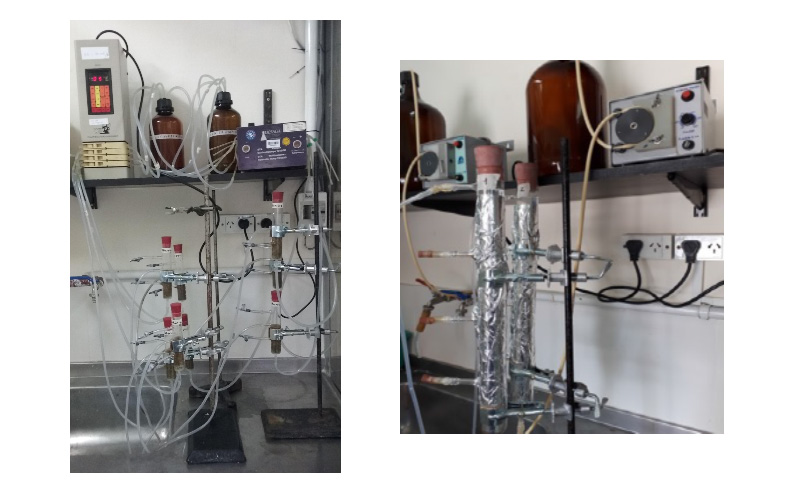
Figura 1: Columnas desnitrificantes de flujo ascendente a escala de laboratorio, 30 y 300 mL. 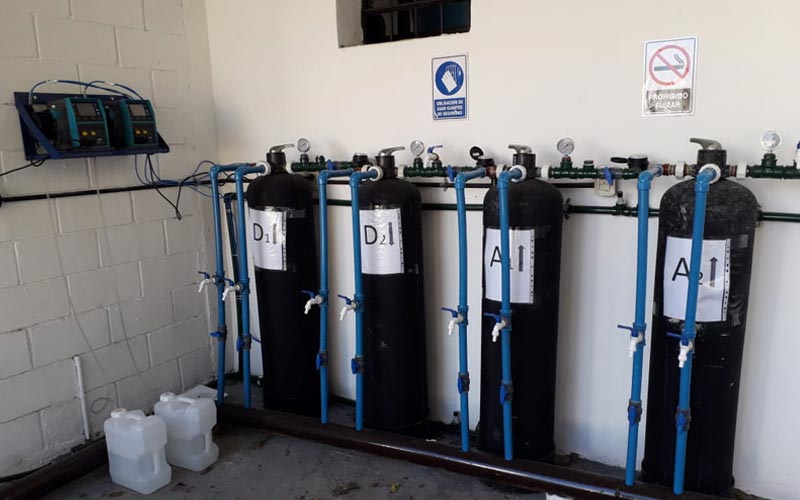
Figura 2: Columnas desnitrificantes a escala piloto- 100L. 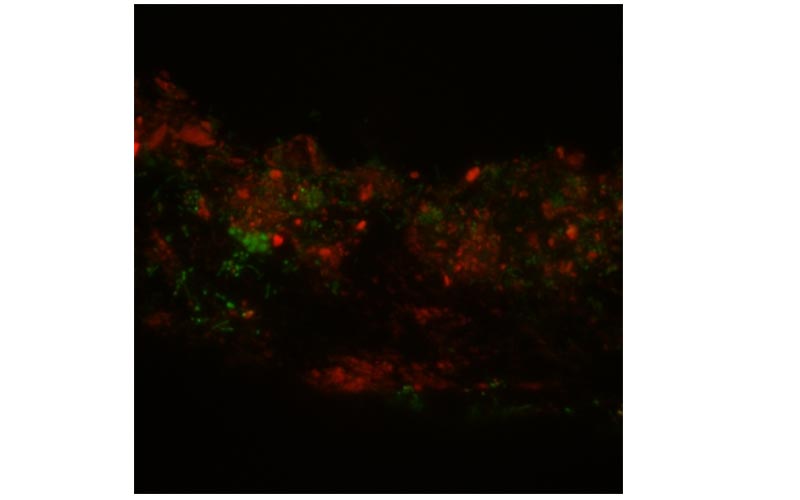
Figura 3: Microscopía confocal con tinción Live-Dead, mostrando biofilms de bacterias desnitrificantes sobre granos de arena de las columnas de laboratorio. 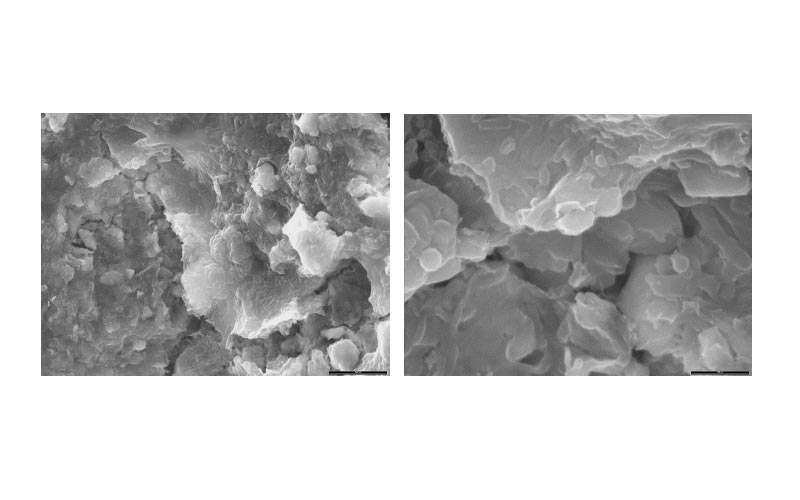
Figura 4: Microscopía electrónica de barrido mostrando biofilms de bacterias desnitrificantes sobre granos de arena de las columnas de laboratorio.
There is a global trend toward replacing fossil fuels with renewable energy sources that exhibit a neutral or negative carbon balance and minimize the environmental impact associated with greenhouse gas emissions. One alternative to fossil fuels is biogas, which can be used to generate thermal energy, produce electricity, or even be directly burned in suitably adapted vehicle engines.
Biogas can be obtained as a byproduct of waste disposal activities in landfills or through the anaerobic treatment of wastewater, both of which are common practices in Argentina. More recently, efforts have been directed toward developing processes in which biogas is the primary product. Examples include the anaerobic digestion (AD) of mixtures of solid wastes and the co-digestion of agricultural residues, for which several digesters have been installed in recent years.
The AD process is carried out by a complex microbial community organized into interconnected functional guilds that perform the four sequential stages of the process: hydrolysis, acidogenesis, acetogenesis, and methanogenesis.
Although AD is a well-established technology, there is still a limited understanding of which community members are essential for process performance, how they interact with one another, and how these interactions influence reactor behavior. Start-up of AD systems relies on the selection, through environmental and operational adjustments, of a self-assembled microbial consortium capable of completing all the metabolic steps required for methane production. This process is often lengthy and prone to operational failures. Even under stable operating conditions, disturbances may occur that inhibit one or more microbial guilds, resulting in temporary process failures and economic losses.
Since the stability and performance of anaerobic reactors depend strongly on the structure of the microbial community, understanding microbiome composition and microbial interactions is essential for improving process robustness, accelerating reactor start-up, and enhancing recovery after disturbances.
The overall objective of this project is to gain a deeper understanding of the interactions governing the microorganisms involved in anaerobic digestion. To achieve this goal, we propose to assemble, for the first time, synthetic microbial consortia capable of producing methane from complex substrates. The construction of these consortia will provide a controlled experimental platform for testing hypotheses related to the role of microbial interactions, their association with community structure and dynamics, and their implications for the function and stability of biogas-producing systems.
This project is funded by **PICT 2018**.
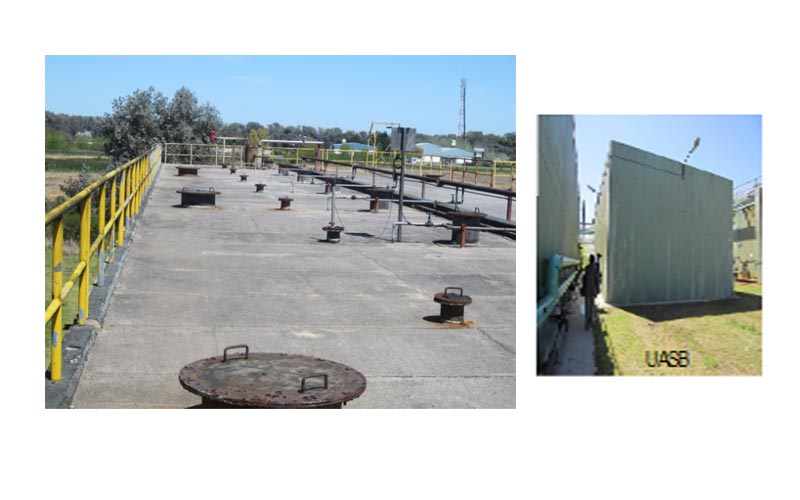
Reactores anaeróbicos a escala industrial.
Leaf litter decomposition is a key ecological process that drives carbon and nutrient cycling in terrestrial ecosystems.
Recent studies suggest that an affinity exists between senescent plant material and the microbial communities inhabiting the soil beneath the canopy of the plant that produced it. This phenomenon, known as the Home-Field Advantage (HFA), proposes that litter decomposes more rapidly beneath individuals of the same species than beneath individuals of different species. However, the mechanisms underlying this interaction remain poorly understood.
HFA has been documented and quantified in the field for several species of Nothofagus in Lanín National Park. In particular, differences in decomposition rates have been observed among Nothofagus dombeyi, Nothofagus nervosa, and Nothofagus obliqua.
The aim of this project is to evaluate, under controlled laboratory conditions, whether different Nothofagus litter types exposed to the same microbial inoculum influence the structure of decomposer microbial communities and the production of extracellular enzymes involved in litter degradation.
Special emphasis will be placed on lignocellulolytic enzymes, which play a central role in the breakdown of complex plant polymers such as cellulose, hemicellulose, and lignin. By linking microbial community composition with enzymatic activity, this study seeks to determine whether these enzymes contribute to the mechanisms responsible for the Home-Field Advantage and, more broadly, to improve our understanding of plant–microbe interactions that regulate decomposition processes in forest ecosystems.

Nothofagus del parque Nacional Lanin.
Members:
Agustina Massicot
a.massicot@hotmail.com
PhD fellow
Carolina Baqué
carolinabaque21@gmail.com
Graduate student
Public profile
Ezequiel Pulicari
E-Puli@outlook.com
Graduate student
Public profile
Tahiel Maccario Bragagnolo
Bachelor’s thesis student
tahiel53@gmail.com
Gallery
Figura 1: Columnas desnitrificantes de flujo ascendente a escala de laboratorio, 30 y 300 mL. Figura 2: Columnas desnitrificantes a escala piloto- 100L. Figura 3: Microscopía confocal con tinción Live-Dead, mostrando biofilms de bacterias desnitrificantes sobre granos de arena de las columnas de laboratorio. Figura 4: Microscopía electrónica de barrido mostrando biofilms de bacterias desnitrificantes sobre granos de arena de las columnas de laboratorio. Reactores anaeróbicos a escala industrial. Nothofagus del parque Nacional Lanin.